The Productivity Paradox: Why AI Wins Aren't Showing Up in the Stats

Key points
Key takeaways from a Big Technology Podcast interview with Ethan Mollick, Wharton professor and author of Coexistence: The Next Phase of AI (October 2026):
Productivity paradox. US labour productivity has grown at an annualised 2.4% since early 2004 (Dallas Fed), and jobs with high AI exposure have actually seen weaker productivity growth than low-exposure roles — below their pre-COVID and COVID peaks. Individual gains have not translated into aggregate output.
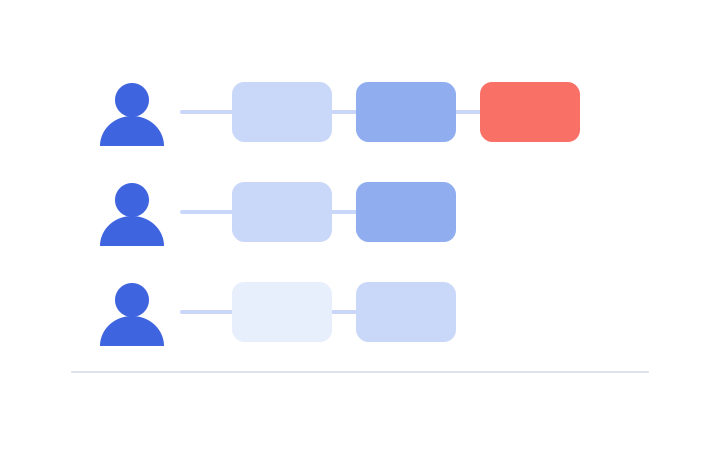
The multiplayer problem. AI is a single-player experience inside multi-player organisations: teams producing 20x more code ship only ~30% more products. Organisations have not yet been restructured to absorb individual productivity gains.
ROI is already real. Mollick says he no longer hears C-level executives question whether AI pays off — a Workday survey of 1,000 large companies found 85% of those over $1B revenue reporting positive ROI — the unresolved question is how to move from individual gains to organisational transformation.
Token-spend noise. The loudest voices claiming AI spend is out of control tend to be companies with competing AI products; token costs are a management problem — without explicit usage policies, employees overuse tokens by default.
Pilot failures are healthy. The widely cited MIT "95% of AI pilots fail" study is, in Mollick's words, a famously bad study; high failure rates are the point of experimentation when there is no playbook to follow.
Structural change pays. One company cut a $200M mainframe data-migration plan to $20M — and possibly $2M — by pulling apart teams and pairing senior engineers with subject-matter and marketing experts on high-token-budget "impossible" projects; role boundaries are dissolving as coders design and designers code.
Lost management muscle. Roughly 40% of American companies' 20th-century advantage came from superior management (Harvard research), yet organisations have outsourced organisational design to SaaS vendors and consultants and lost the muscle memory for structural change.
Read more: Big Technology Podcast · One Useful Thing